
FPC vs Rigid PCB: Where Lightweight and Bendable Features Become the Deciding Factor
- afax TE.
- Jan 14
- 3 min read
For engineers and product designers, choosing the right printed circuit board (PCB) is a foundational decision. The classic debate often centers on Flexible Printed Circuits (FPCs) versus traditional Rigid PCBs. While rigid PCBs are the backbone of countless electronics, FPCs offer unique lightweight and bendable advantages that are not just beneficial but decisive in specific applications. This guide breaks down the product differentiation to help you select the optimal solution based on your application's core demands.

Understanding the Core Difference: Rigid vs. Flexible
At their essence, Rigid PCBs are built on solid, unyielding substrates like fiberglass (FR4). They provide excellent structural strength, high component density, and are generally cost-effective for standard, static applications.
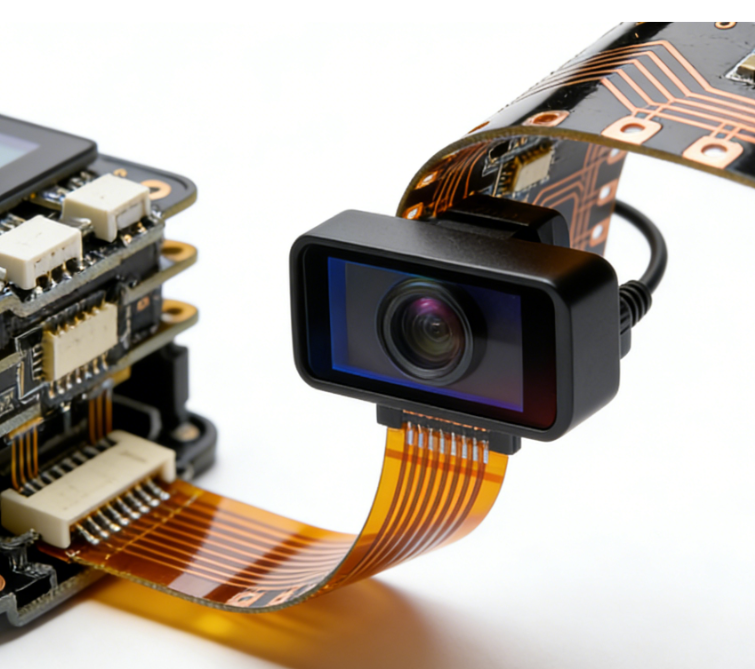
Flexible PCBs (FPCs), in contrast, are fabricated on malleable substrates such as polyimide or polyester film. This inherent flexibility allows them to bend, fold, and twist during use and installation, while also being significantly lighter than their rigid counterparts.

Key Advantages of FPC: Beyond Mere Flexibility
The benefits of FPCs extend far beyond simple bending:
Ultra-Lightweight & Thin Profile: FPCs dramatically reduce weight and space, crucial for modern miniaturization.
Dynamic Flexibility & High Durability: They can withstand millions of bending cycles in hinged applications without failure.
3D Assembly Freedom: They can be folded into compact 3D shapes, optimizing space in complex enclosures.
Improved Reliability: By reducing the need for connectors and solder joints between multiple rigid boards, FPCs minimize potential points of failure.
Heat Dissipation & Resistance: Polyimide materials often exhibit good thermal stability and dissipation properties.

Decisive Applications: Where FPC Advantages Are Non-Negotiable
In these sectors, the lightweight and bendable advantages of FPC transition from convenient to critical:
1. Consumer Electronics & Wearables
Smartphones & Tablets: FPCs enable folding displays, connect cameras in pop-up/rotating mechanisms, and link boards in tight, thin spaces.
Wearable Devices: In smartwatches, fitness bands, and AR/VR headsets, lightweight and bendable circuits conform to the human body and fit into curved, ergonomic designs.
Laptops: Hinge connections and ultra-thin bezel displays rely heavily on FPCs.
2. Automotive Electronics
Modern cars are packed with electronics in constrained, non-uniform spaces. FPCs are vital for:
LED lighting systems and flexible dashboards.
Sensors and controls within steering columns, seats, and doors.
Advanced Driver-Assistance Systems (ADAS) cameras and displays, where weight and compact installation are key.
3. Medical Devices
Portable & Implantable Devices: The lightweight nature reduces patient burden, while flexibility allows for compact, ergonomic designs (e.g., hearing aids, pacemakers, glucose monitors).
Diagnostic Probes & Imaging Equipment: FPCs fit into slender, articulating endoscopic or ultrasound probes where rigidity is impossible.
4. Aerospace & Robotics
Drones & Satellites: Every gram saved (lightweight advantage) directly impacts flight time and payload capacity. FPCs fit into aerodynamic curves.
Industrial Robots & Robotic Arms: FPCs withstand continuous motion and bending in joints and grippers, offering superior durability versus rigid cables or boards.
5. Advanced Interconnects
Replacing bulky wire harnesses and connector assemblies with a single, streamlined FPC reduces weight, simplifies assembly, and boosts reliability in almost any electronic system.
Selection Guide: FPC vs. Rigid PCB - How to Choose?
Use this simple framework based on your application's needs:
Choose a Flexible PCB (FPC) if your design requires:
Movement during operation (bending, folding, vibrating).
Extreme weight or space savings.
Conforming to a specific 3D shape or curved surface.
High reliability with reduced interconnects.
Applications in harsh environments where vibration damping is needed.

Choose a Rigid PCB if your design has:
A completely static, fixed form factor.
High-power components requiring robust heat sinking.
Very low-cost requirements for simple, high-volume products.
Space not being a primary constraint.
Conclusion: Aligning Technology with Application Needs
The choice between FPC and Rigid PCB is not about which technology is superior, but which is optimal for your specific application. Rigid PCBs remain the cost-effective, robust choice for stationary assemblies. However, when lightweight design, bendability, space savings, and dynamic reliability become paramount—such as in cutting-edge wearables, advanced automotive systems, or mission-critical aerospace applications—the advantages of Flexible Printed Circuits become the decisive factor.


Comments